What to check when you need CCTV for a dairy contract
If you’ve been asked to put in CCTV for a dairy contract, it’s tempting to go straight to counting cameras.
We’d start somewhere else. We’d want to know two things first: what exactly the contract says you need to be able to see, and how long the footage has to be kept. Once those are clear it’s much easier to put in a sensible system, and you’re far less likely to end up paying for cameras you didn’t need.
The short answer: check exactly which areas the contract says need covering, how long the footage has to be kept, and whether any cameras you already have can do the job. Then work out what to buy. There’s no set number of cameras that suits every dairy.
What areas of a dairy might need CCTV?
It varies from one contract to the next, so start with the wording you’ve been given. The areas that tend to come up are:
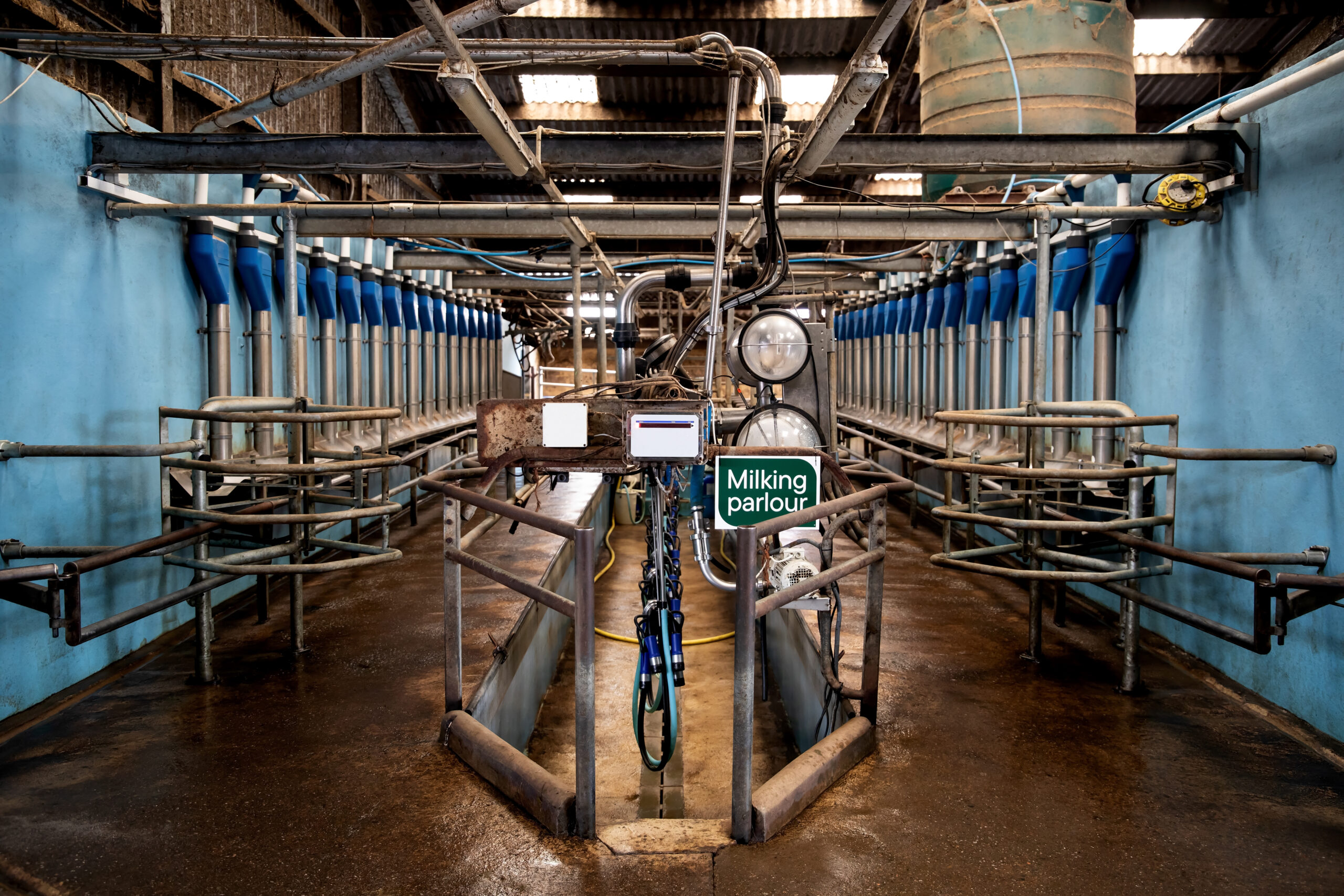
- the parlour or robots
- the collecting yard
- the crush and treatment areas
- hospital pens
- calving pens
- anywhere else cattle are regularly handled, treated or moved
You don’t usually need to cover every corner of the farm, just the areas your contract asks for, with a clear, useful view of each one.
How much recording storage will you need?
If the contract says footage has to be kept for a set number of weeks, the recorder needs enough storage to hold it.
How much you need depends on how many cameras there are, the picture quality, whether they record all the time or only when something moves, and how long it all has to be kept.
This is where we see farmers get caught out. They’ve got 30 days’ recording, a few more cameras go on, and suddenly it’s dropped right down. Changing the recording settings can do the same thing. A recorder that had plenty of room can end up well short. So if you add cameras or change any settings, check how many days you’re actually getting afterwards.
It’s a lot easier to allow for this at the start than to find out later that the oldest footage is being recorded over too soon.
Can your existing CCTV cameras be reused?
If there’s already CCTV on the farm, don’t assume it all has to come out. Some of it may already give a perfectly good view of an area that needs covered.
We’d look at what’s there, check the picture and the recording, and work out what can stay before adding anything new. Sometimes that does mean a new system. Other times it’s two or three extra cameras added to what you already have.
Do you need cameras with all the latest features?
Not always. A lot of modern cameras come with analytics, things like picking out people or vehicles and sending you an alert. That’s handy for security. But where the contract is about showing how the animals are handled and looked after, you don’t need any of that. A camera with a decent, clear picture does the job, and it’s often cheaper.
Can the same cameras be used for other farm jobs?
If you’re putting cameras in anyway, it’s worth thinking about the rest of the farm while the system is being designed. The same system could let you check on cattle remotely, look back at something that happened, keep an eye on the yard and entrances, see what happened around a delivery, or watch over buildings and machinery.
That doesn’t mean putting cameras everywhere. It’s just asking whether moving a camera slightly, or adding one more, would make the system useful all year round.
Position matters as much as numbers
A well-placed camera can cover what would otherwise take two or three badly placed ones. So before worrying about numbers, think about what each camera actually needs to show you. It might be the whole pen, cattle going in and out of an area, what happens while an animal is being treated, or enough detail to make sense of an incident afterwards.
Once you know that, picking the right camera and the right spot for it gets a lot easier.
Think about night-time as well
A camera that looks spot on in daylight can be a different story after dark. A problem we’ve come across is a camera put too close to a gate or the crush bars. The infrared bounces straight back off them and you get a big white patch in the middle of the picture, and you can’t see anything behind it. Headlights, shed lights and deep shadows can spoil the picture too. So it’s worth checking the night view as well as the day view when the system is planned.
Before you buy anything
Pull together:
- the CCTV requirement from your contract
- the areas that need covered
- how long recordings have to be kept
- details of any CCTV you already have
With that in front of you, you can work out what you actually need rather than starting with a box of cameras.
Talk it through with us
If you need CCTV for a dairy contract, give us a call and talk us through what you’ve been sent. We’ll go through the areas that need covered and whether any of your existing cameras can be kept, then work out a sensible system from there without adding kit for the sake of it.
Call Farmer’s Eye on 01382 217377.
Written by Chris Cotton
Chris runs Farmer’s Eye in Dundee and has been installing security systems for about 15 years. We fit CCTV, alarms and livestock cameras on farms and rural properties across Scotland, and we’re NSI Gold accredited.