Bulk fuel tanks can hold thousands of pounds’ worth of diesel, so their location, access and security are worth reviewing.
How to cut the risk of farm fuel theft
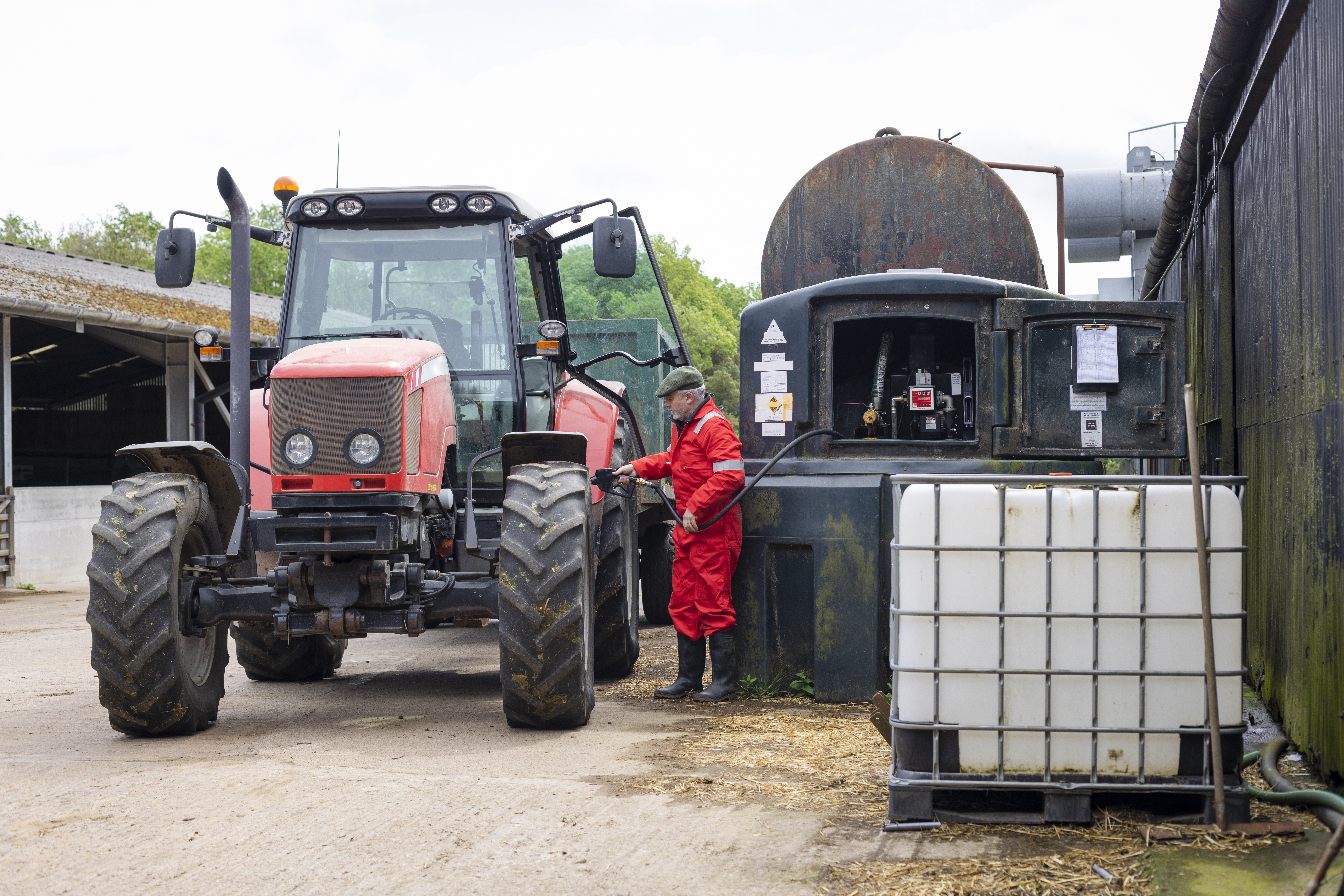
A bulk tank can have thousands of pounds’ worth of diesel sitting in it, out in the yard, often with nothing much between it and the road.
Farm fuel theft is rarely just about the fuel, either. There’s usually damage to the tank or pump, fuel on the ground to deal with, an insurance claim, and the immediate problem of machinery that needs to go out this morning and now has nothing to run on.
Fuel prices go up and down, but diesel is always worth money and it’s always easy to shift.
So if you’ve got a tank outside, especially one you can see from the road, it’s worth ten minutes having a proper look at how easy you’ve made the job.
Does the tank need to be where it is?
The first thing we usually ask when we see an exposed tank is whether it could go somewhere else.
We see a lot of farms where the fuel tank is in full view of the road. You can see where it is, you can see how you’d drive up to it, and there’s not much in the way between the public road and the tank.
Before you spend anything on cameras or alarms, it’s worth asking whether the fuel could just be less obvious and harder to reach. The usual advice is to keep the tank where people on the farm can see it, ideally from a building that’s occupied, while making it awkward to get to from outside.
There’s a balance. You don’t want it tucked away somewhere nobody ever looks either. Out of sight from the road, in sight from the house or the yard, is roughly what you’re after.
One thing worth knowing is that the risk goes up right after a delivery. A full tank is worth more, and a tanker coming up the road is fairly visible. If you see a vehicle hanging about the day you’ve been filled, it’s worth noting the registration.
Some of the best fuel stores we’ve seen are dead simple
A few farms we’ve been to have moved the whole installation into a building or a purpose-built store. The tank, the pump and the controls all get locked up when they’re not being used, and only what’s needed for refuelling is out during the day. At the end of the day it’s all shut away again.
That’s a much harder thing to attack than a tank and pump sitting out in the open all year.
Fuel storage has rules attached, mind. In Scotland, storing oil on a farm generally means secondary containment, so don’t shift a tank into a shed without checking the environmental and fire side of it first.
The principle holds though. If somebody can’t easily get to the fuel, you’ve dealt with most of the problem before you’ve bought a single camera.
Make it hard to get a vehicle beside the tank
Fuel is heavy. Anybody taking a worthwhile amount needs a way of moving it, so it’s worth looking at the route in and out as much as the tank itself.
Could somebody drive a van straight up beside it in the dark? Could they turn round easily? Is there an old entrance that’s always left open? Would locking one gate make the whole thing a lot more awkward?
Gates, blocked-off entrances and something solid in the way are unglamorous, and they’re often more use than another camera. A locked gate between the road and the tank does something a camera can’t, which is physically slow somebody down.
It’s also worth asking how much you really need sitting there, particularly at a steading nobody’s at overnight. There’s a saving in buying a full load when it’s cheap, and there’s a risk in having a lot of money’s worth sitting in a field. Only you can weigh that up.
Lock the tank itself
If the tank has to stay where it is, look at the filling and dispensing points.
A locking cap and an anti-siphon device are the usual starting points, and both are on the list Police Scotland’s crime prevention officers put out through Neighbourhood Watch. Anti-siphon devices fit in the filler and stop a pipe being dropped into the tank. If you’re buying locks, look for ones made to the Police Preferred Specification, which is the standard they point people at.
Whatever you fit has to suit how the farm actually works. Security that makes refuelling a nuisance gets left unlocked within a fortnight, which is worse than not having it.
If the fuel store is locked with a padlock, think about who has a key. Keys get copied, lent out and kept by people who left two years ago, and a lock is only as good as the list of folk who can open it.
It’s worth thinking about it in stages. Can they get to it? Can they get the fuel out? Can they get it away quickly? And would anybody know they were there?
The fuel they take might be the smallest part of the cost
Whoever’s taking your diesel isn’t bothered about leaving the tank, pipework and fittings in good order.
If something gets damaged and fuel escapes, you can lose a lot more diesel than was ever stolen, and then you’ve a spill to deal with as well as a theft. Leaking tanks, pipework and hoses are one of the main ways farms end up with a pollution problem.
Who pays for a clean-up depends on the circumstances and on your cover, so I’d not assume anything there. It’s worth reading your policy now rather than finding out afterwards.
Then there’s the disruption. It’s rarely just litres times price. Somebody has to sort replacement fuel, there might be a tank or pump to repair, there’s police and insurance paperwork, and there’s footage to find. All on a day you had something else planned.
Tank alarms are worth a look
A fuel level alarm or monitoring system can pick up a sudden drop in the tank and tell you something’s going on.
For some farms that’s a better first spend than CCTV. A camera shows you somebody taking fuel. A tank alarm tells you the fuel is going. Plenty of farms end up with both.
What CCTV actually does for fuel theft
It puts some people off, it shows you who and what came near the tank, it might help identify a vehicle, and it gives you evidence afterwards.
We had a customer who lost a substantial amount of fuel, and the fuel area happened to be covered. She told us afterwards that her insurer had said the footage mattered, because they could see the fuel actually being taken rather than assuming, in her words, that “we had just burned through it all.”
That’s one insurer and one claim, and footage isn’t a requirement for every fuel theft claim. But it makes the point. Without it you know several thousand litres have gone. With it you can show when it went and how.
Don’t just point a camera at the tank
Think about what you’d want to see the morning after. A lovely close-up of the tank proves somebody was there. It won’t tell you how they got in or what they left in.
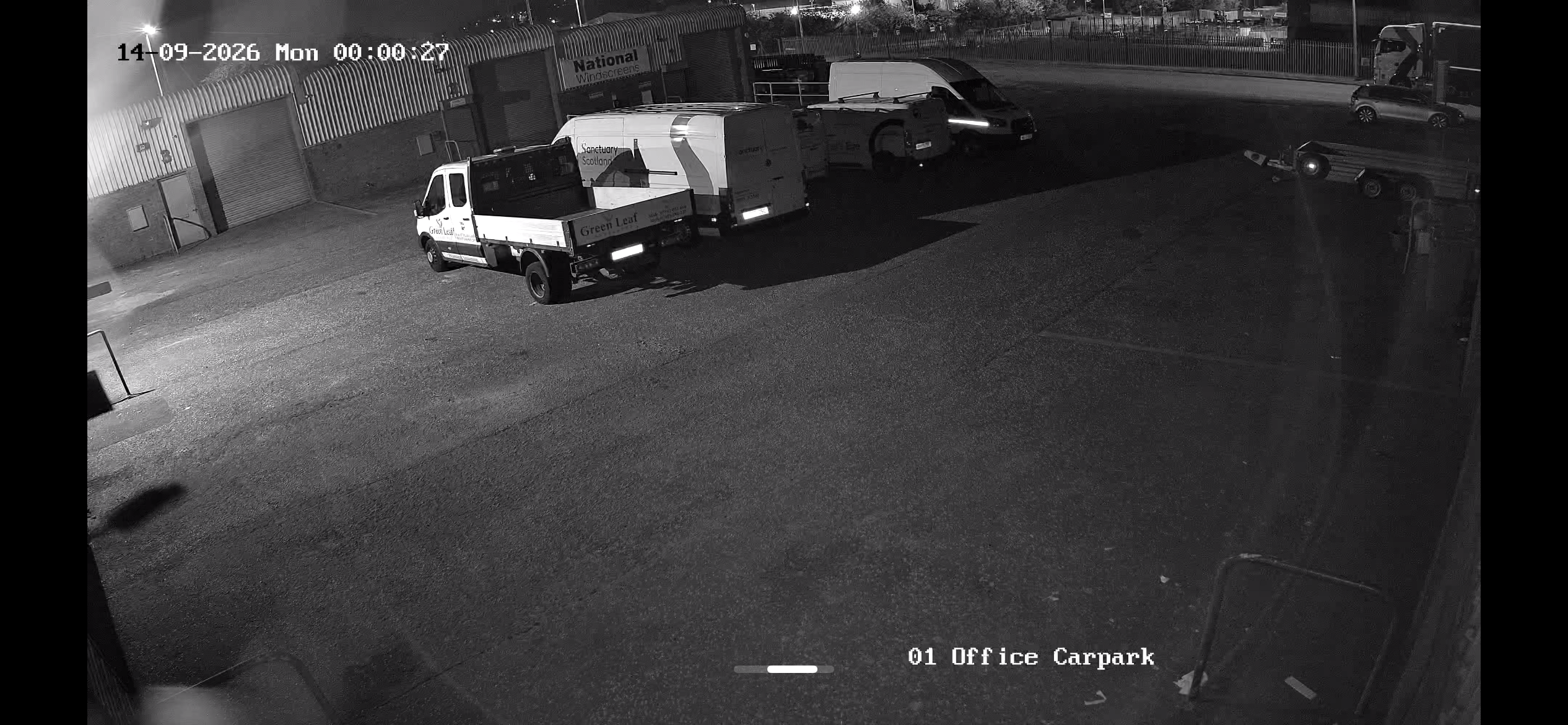
Worth covering: the tank, the way somebody would walk up to it, the point where a vehicle can get close, and the entrances to the farm. Then go and look at the picture at night, because that’s when you’ll need it.
If getting a registration matters to you, don’t assume an ordinary camera will manage it. We went through that in can CCTV read number plates. Sometimes it will, but reliable plate capture is a separate job.
Good footage, no diesel
There’s an obvious limit to ordinary CCTV. You can have cracking footage of somebody filling their van and still have an empty tank.
Where the risk justifies it, monitored CCTV goes a step further. A detection system alerts an alarm receiving centre when somebody comes into a protected area, an operator looks at the cameras to see what’s actually happening, and where there’s a speaker on site they can speak to the person standing beside your tank and tell them they’re being watched. That’s a different thing from finding the footage at seven the next morning.
It won’t stack up for every diesel tank, and it’s no substitute for a locked gate and a decent store. But for a tank that’s exposed, has been hit before, can’t easily be moved, or holds a lot of money’s worth of fuel, it’s worth pricing.
Lighting
Light makes it harder to work unnoticed and it makes a big difference to what the cameras give you. That doesn’t mean floodlighting the whole steading. A light in the right place, coming on at the right time, takes away the cover somebody was counting on.
Don’t forget the fuel in the machinery
The bulk tank is the obvious target, but tractors, telehandlers, diggers and generators are all sitting there with diesel in them.
Think about where machines are left overnight, and try not to leave them beside an easy gateway with their tanks exposed. Moving where things get parked costs nothing and can do more than another camera.
Knowing what you had and who used it
On a bigger farm there might be several people using the same tank quite legitimately. A fuel management system lets you control who can draw fuel, using a fob or a code, and records who took what and when. An odd loss then shows up quickly, and you can tell the difference between a theft and a busy fortnight.
Security isn’t only about somebody coming over the fence. A lot of it is just knowing what should still be there.
What we’d do first
If we walked onto a farm and saw a diesel tank in full view beside an open yard, we wouldn’t start by quoting for the biggest CCTV system we could think of. We’d go in this order.
- Can the tank be moved, screened or made less obvious from the road?
- Can vehicle access be restricted, with gates, a blocked entrance or something solid in the way?
- Can the tank, cap and pump be locked, and can more of it be shut away when it isn’t in use?
- Would a tank alarm tell you sooner?
- What does the CCTV actually need to see, including the approach and the entrance?
Then, if the risk warrants it, whether monitoring and a speaker are worth adding.
Some questions to ask on your own farm
Go and look at the fuel store as though you’d never been on the place before.
- Can you see the tank from the public road?
- Can you drive straight up beside it?
- What stops somebody reaching it once everybody’s away home?
- Can the tank or pump be locked away?
- Who has a key?
- Would anybody know if the level dropped tonight?
- Does the CCTV cover the tank, and the way in?
- What does that picture look like at 2am?
- What does your insurance actually ask for?
- If the tank was damaged, would the containment hold what came out?
You might find the best improvement costs nothing. You might find that a tank with a few thousand pounds of diesel in it is the least protected thing on the farm. Either way, better you work that out than somebody else does.
Nothing makes fuel impossible to steal. The job is to make your place slower, harder and riskier to steal from than it is right now. It’s worth ten minutes looking at your fuel store and asking how easy you’ve made it for somebody who shouldn’t be there.
If you want us to have a look at the security round your fuel store or yard, give us a shout on 01382 217377. Most of our work is farm CCTV and security systems across Scotland.
Chris Cotton runs Farmer’s Eye, an NSI Gold accredited security company in Dundee, and has been fitting CCTV on Scottish farms for over 15 years.