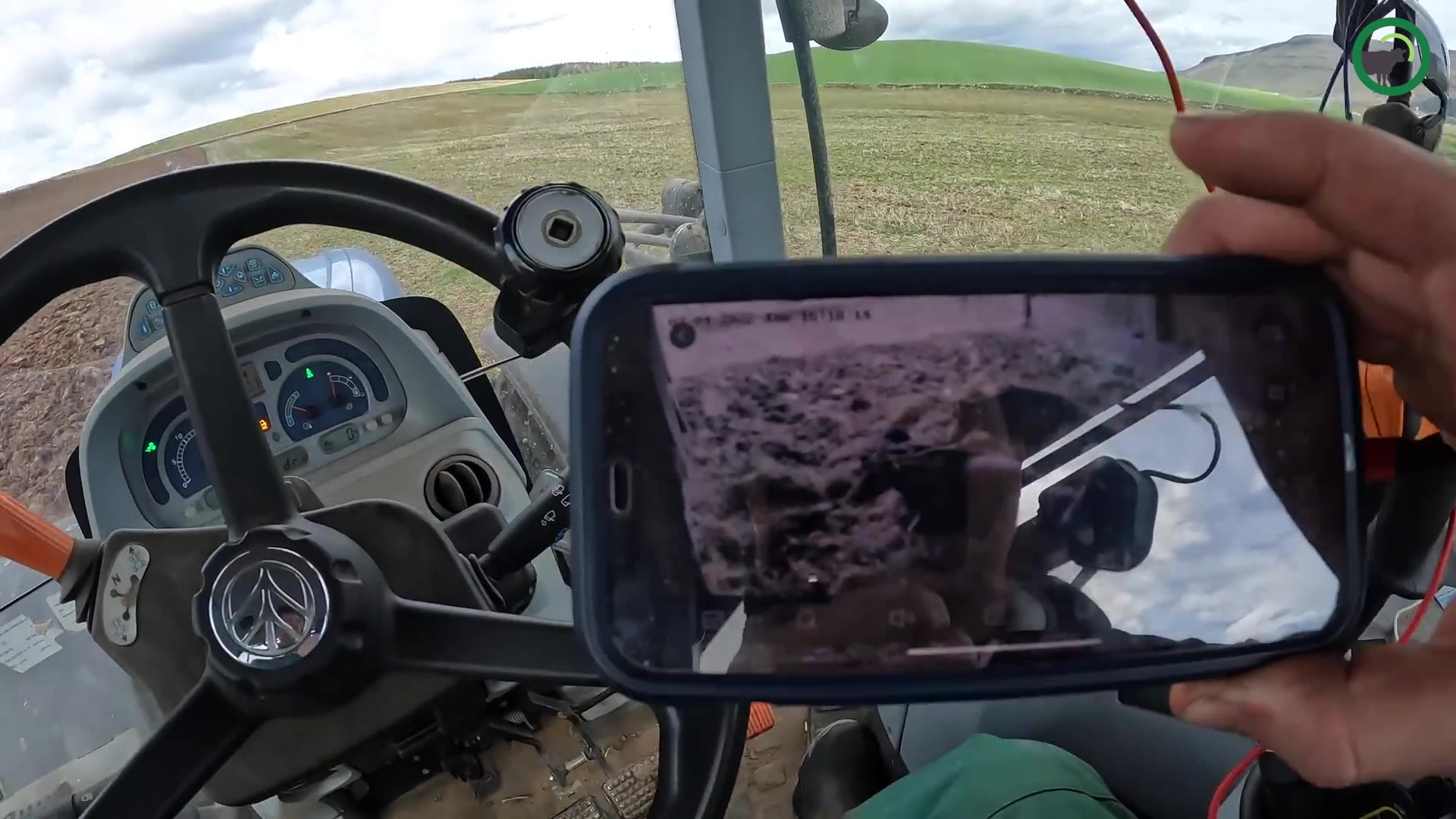
Livestock cameras let farmers check animals remotely while carrying on with the rest of the day’s work.
What a livestock camera system costs
*Prices checked September 2026
Livestock camera prices vary a lot. You can buy a camera online for around £100. A professionally installed livestock camera system usually starts at about £1,200 to £1,800 + VAT. That’s a big gap, but you’re not really comparing the same thing.
The £100 gets you a camera. The £1,500 should get you everything needed to make that camera work in a farm shed and get the picture back to your phone reliably, at 2am, in the middle of calving.
Just so you know where I’m coming from, we fit complete systems and we also sell self-install kits, so we’re not neutral. I’ve tried to be fair though, and for some farms the £100 camera really is the right answer.
What goes into a system
Depending on the farm, getting a camera working can also need cable, waterproof connections, power, brackets, a wireless link between buildings, network switches and something to record onto. Then someone has to set it all up and test it.
Sometimes you need hardly any of that. If the calving pen is next to the house and the Wi-Fi reaches it fine, a £100 to £150 camera might be nearly all you need. Other times the camera is in a shed a few hundred metres from the house with no internet anywhere near it. Getting that picture to your phone can cost a lot more than the camera itself.
So when you’re comparing prices, the first thing to work out is whether you’re looking at the price of a camera or the price of something that’ll actually work.
In this guide I’m talking about livestock cameras for calving, lambing and foaling, for keeping an eye on a sick animal or a particular pen, or for watching for bulling. Big poultry sheds and pig units are a different job altogether, so I’ve left them out.
Farmproofing is the bit that catches people out
Getting the kit together is the easy part. Making it survive in a farm building is the part people underestimate, and it’s where most of the failures we get called out to come from. We call it “farmproofing”.
A shed is a hard place for electronics. There’s moisture in the air, muck, dust off the bedding, ammonia in a cattle shed, birds, rats and the odd pressure washer. Then there’s a camera on a gable end taking wind and driving rain from one direction all winter.
The camera itself is usually the least of your worries. Most decent cameras are rated IP66 or better, which means the camera body will cope. The weak points are everywhere the camera isn’t. The plug on the end of the network cable, the joint where two cables meet, the power supply, the cable entry into the box, the screw holes in the bracket. A network plug pushed into a coupler and left hanging in a shed will corrode surprisingly quickly. Water can also run along a cable and into whatever’s at the end of it, so cable needs a drip loop before it reaches any connection, not a straight run downhill into the back of the camera.
If you’re doing it yourself, the things worth getting right are the ones that cost almost nothing at the time and a lot of hassle later. Use outdoor-rated cable rather than a length of indoor patch lead. Make joints inside a proper sealed enclosure, not with tape. Use glands where cables go into a box. Keep power supplies inside, somewhere dry, rather than screwed to a shed wall. Put cable where a rat can’t reach it and a loader bucket can’t catch it. And think about where you’d be standing with the pressure washer.
None of this is complicated, but it takes time, and it’s the part that gets skipped when you’re trying to get a camera up before the cows start calving. If a camera works all summer and then goes off in February, it’s rarely the camera that failed. It’s usually a connection that was never sealed properly in the first place.
Rough livestock camera prices
These are guide prices based on what’s on the market in 2026. They’ll vary, so treat them as ballpark figures.
Cheap camera online: around £100 including VAT
For that you can get a basic camera that pans and tilts, and sometimes zooms. It can be perfectly fine for watching one pen or a small shed. Some have a 4G SIM built in, which saves a lot of bother if there’s no Wi-Fi nearby. Most come with a power supply and a bracket, but getting power out to the camera, any extra cable and waterproofing may still be down to you. If it isn’t a 4G camera, so is getting the internet to it.
Camera from a specialist farm supplier: roughly £200 to £500 including VAT
Mostly you’re paying for someone having already picked a camera they know works for livestock, so you’re not wading through hundreds of lookalikes online. You’ll usually get better advice and some remote support too. Towards the top of that range you tend to get a better optical zoom and a better-built camera.
Most of these cameras rely on 4G. They don’t usually come with the Wi-Fi equipment to get the picture back to the house, though you can often buy it separately. They tend to suit a farm that only needs one camera.
Self-install kit from a specialist: roughly £700 to £1,000 + VAT
This is where you stop buying a camera and start buying a system. The supplier works out what you need, sends everything required to get it connected (often including a wireless link back to the house), sets it up and helps you remotely. You put it up yourself. It’s a good middle ground if you’re happy running cable and putting up brackets but don’t want to deal with the network side. Our own self-install kits work this way.
The first camera costs a lot more than a 4G camera, because you’re paying for the network as well. The second camera onwards starts to cost about the same as a 4G one. And where the system can run over the farm’s own internet, you’ve no SIM cards to pay for every month.
Fully installed by a specialist: usually from around £1,200 to £1,800 + VAT
On top of the kit, you’re paying for someone to design the system, fit it, test it and support it afterwards. What’s included varies a lot between installers, so ask.
Extra cameras: roughly £300 to £700 each on a professional system
The price depends on the camera, and on whether more network equipment is needed to reach it.
When a £100 camera is good enough
There’s no point spending thousands if a cheap camera will do the job. It makes sense if you’ve only got one pen to watch, the Wi-Fi is already there or you have a strong 4G signal, you’re happy setting things up yourself, and it’s not the end of the world if it stops working for a day. If you just want to glance at a lambing pen from the kitchen, a £100 camera could be all you need.
It’s different if you’re watching a valuable animal, relying on several cameras every night or expecting them to double up as security. The more you rely on the cameras, the more reliability and support matter.
Why more cameras can add up quickly
How far apart the cameras are matters as much as how many there are.
One camera in a shed you can easily run a cable to is fairly cheap. Four cameras in four different buildings is a different job, especially if there’s no cable between them. You’ll probably need wireless links between the buildings to get the picture back to the internet connection.
That’s a big part of why the first camera on a professional system looks expensive. Once the network is in, adding another camera usually costs a lot less.
What about 4G cameras?
4G is handy where getting internet out to a shed would otherwise be a pain. The camera, or a small router beside it, connects straight to the mobile network, so you don’t need a link back to the house.
The downside is that you’re paying for a SIM every month. It’s also worth checking what happens to the SIM if it isn’t used for a while. Some cheap data SIMs get cut off after a spell of not being used, and you only find out when you go to check on a cow.
We had one customer whose SIM got cut off every year. Every calving season he’d phone us, we’d get it all going again, and by the time he’d paid us he’d spent more than a proper pay-monthly SIM would have cost him.
On some farms a wireless link back to the house is the obvious answer. On others 4G is much simpler.
More megapixels isn’t always better
It’s easy to assume the camera with the most megapixels gives the best picture. For watching livestock on your phone, that’s not always true.
A higher-resolution camera sends more data. If the farm’s internet is on the slow side, you end up with a picture that stutters and a camera that takes ages to respond. You press to move it and then sit there waiting. That’s one of the most common complaints about livestock cameras. Often the camera and the internet are both fine, and they just haven’t been set up to work together.
Optical zoom is worth having
For livestock, a good optical zoom is usually more use than extra resolution. Digital zoom just blows up the picture you’ve already got, so it goes fuzzy the further in you go. Optical zoom uses the lens, so you keep the detail.
That matters when you’re trying to see whether the sac is still over a calf’s face or which way the feet are pointing. The picture doesn’t have to be beautiful. It just has to show you what you need to know.
One farmer phoned the lads while they were still driving home from fitting his camera, to say it had already paid for itself. A calf had been born with the sac over its face and the cow hadn’t licked it off. He saw it on the camera and got to it in time.
Check whether it goes all the way round
This sounds minor until you’re using the camera every night. Some pan-tilt cameras can’t keep turning through a full circle. They get most of the way round and then have to go all the way back the other way. So looking from one end of the shed to the other can mean the camera takes the long way round.
If you only use it now and then, it won’t bother you. If you’re flicking between pens all night, it gets annoying fast. Look for continuous or endless 360-degree rotation.
What a more expensive camera gets you
Some of the differences don’t show up on a spec sheet. These include how well it’s built, how good the fixings are, how it copes with the weather, how good the app is, how long the warranty is and whether there’s anyone to help when it goes wrong. Cheap cameras can also come with instructions and apps that are hard work.
The one I’d worry about most is security. A camera is a small computer connected to the internet, and like any computer it needs updates to fix security holes when they’re found. With the cheapest cameras you’re unlikely to get those updates, or they stop after a while. That leaves a device on your network, or on the internet, that nobody is looking after. The better-known brands are much more likely to keep releasing updates for their cameras.
That doesn’t make a cheap camera a bad buy. If it costs £100 and does the job for three calving seasons, replacing it then might still be the sensible thing to do. Just know what you’re giving up, check before you buy that the camera gets updates, and keep the firmware up to date.
What about an electrician or a general CCTV installer?
That can work fine. An electrician you already trust will be perfectly capable of running cables and putting the equipment up, and a general security installer will know CCTV and networking. What matters is whether they understand how you’re going to use the camera. A camera that’s great for security isn’t automatically a good calving camera. It works the other way too. Someone who knows livestock cameras isn’t necessarily the right person to design a proper security system.
Can a livestock camera double up as security?
Often it can, and it’s worth thinking about what the camera could do for the rest of the year. A camera that watches the calving pens in spring might cover a shed door or the machinery in the yard the rest of the time.
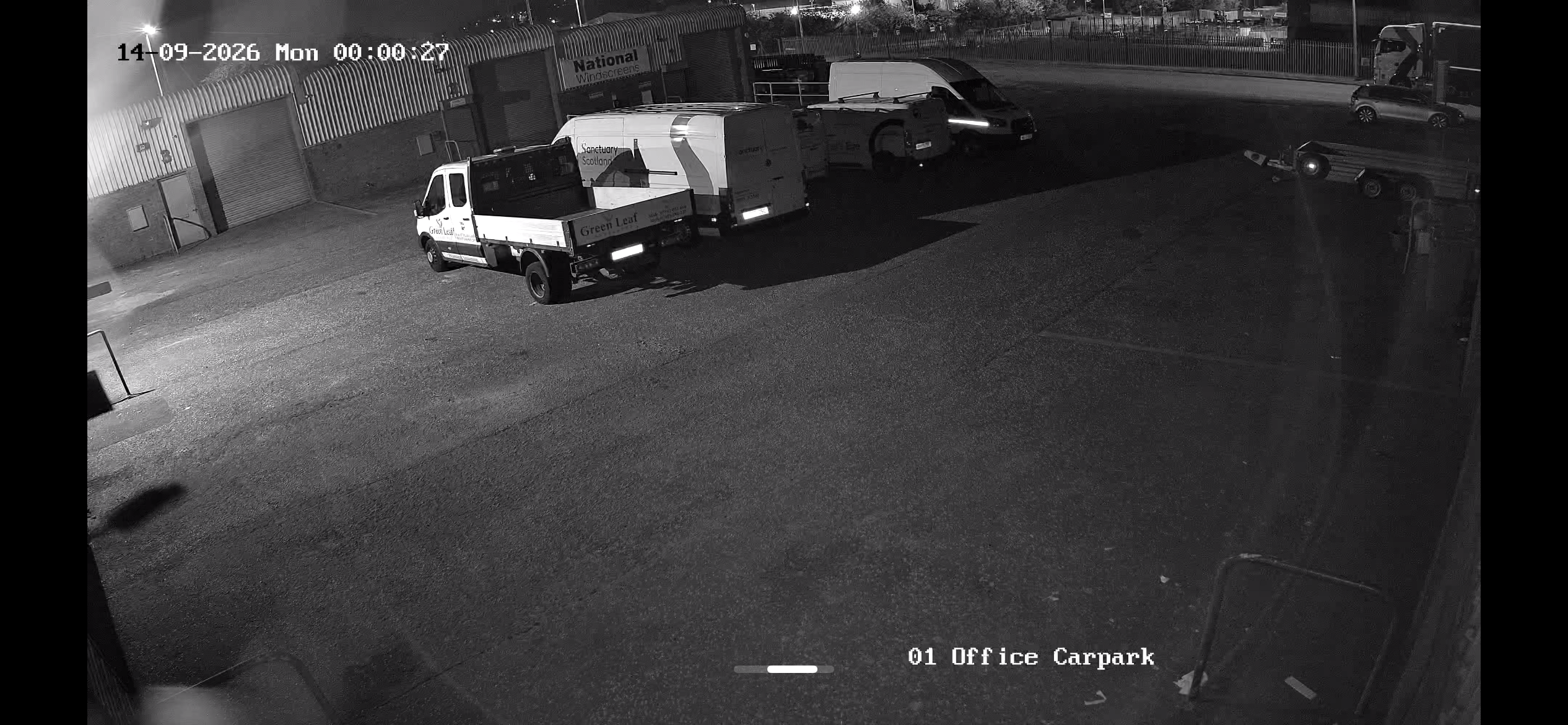
But a livestock camera giving you some security cover is different from having a proper farm security system. If security matters, especially if your insurer has requirements, speak to them first and use an approved installer. You can check who’s approved in your area on the NSI company finder and the SSAIB supplier search.
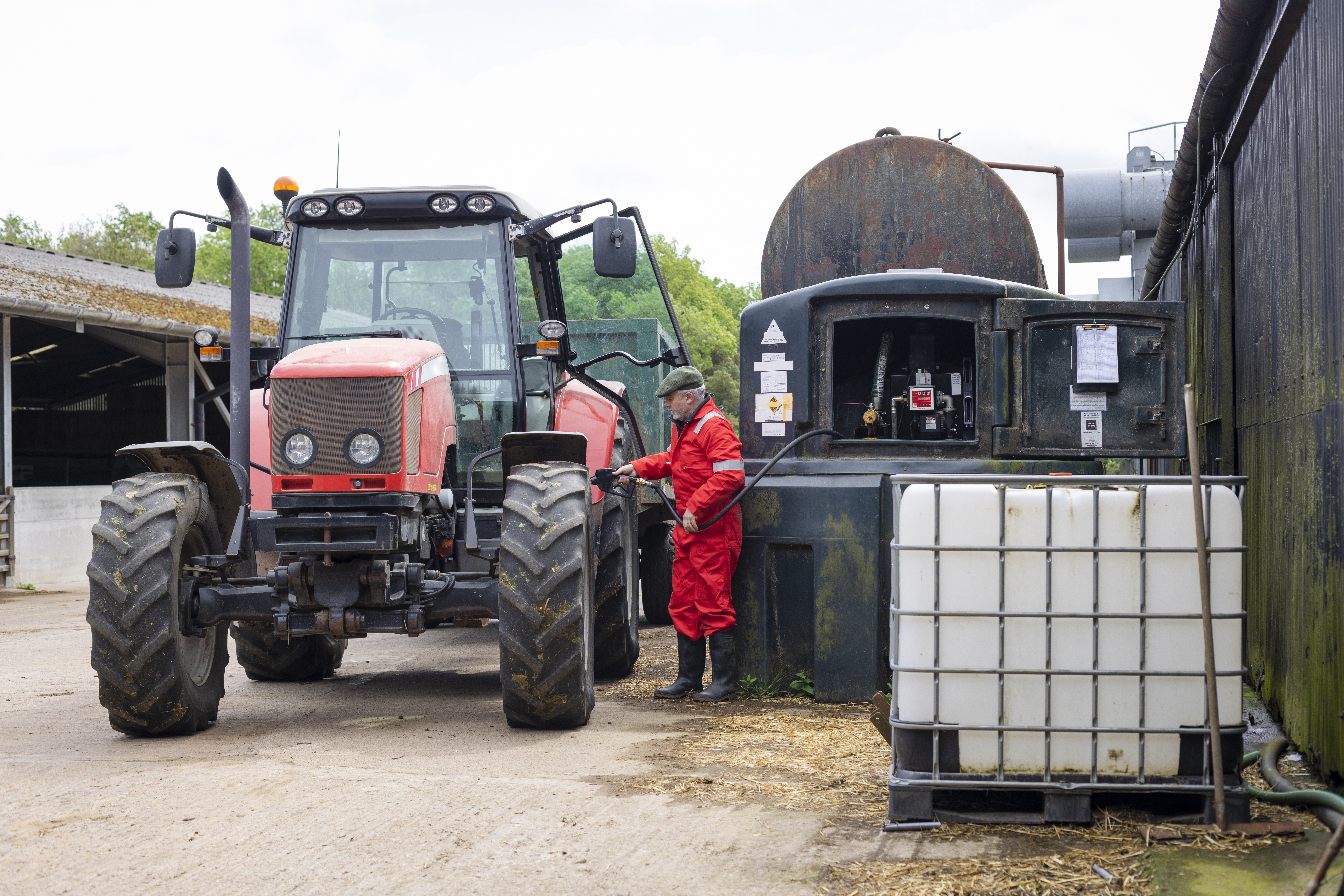
If you want the cameras to read number plates at the entrance as well, that’s a different job again, and I’ve written about what it takes to read a plate separately. The same goes for the fuel tank, which is usually the thing worth most money sitting outside. I’ve written about keeping a farm fuel tank secure separately.
Questions to ask before comparing quotes
Two quotes that both say “one livestock camera” can include completely different things, so it’s worth asking:
- Does the price include everything needed to make it work?
- How will it connect to the internet, and has anyone looked at the connection on my farm?
- Are the cable, waterproofing and brackets included?
- How and where does it record, and is that included?
- Are there any SIM or subscription charges?
- Does the camera get security updates, and for how long?
- Is it set up before it arrives, or do I do that?
- What support do I get if it stops working, and does that cost extra?
- How long is the warranty?
- What do other farmers say about the supplier?
So how much should you spend?
You might have one calving or lambing pen, good Wi-Fi or a strong 4G signal, and be handy with technology. In that case there’s nothing wrong with starting with a £100 camera.
If you want some help picking one and setting it up, a specialist farm camera supplier is a sensible middle ground, especially for a single camera. If you’ve got several pens or buildings and need the cameras to work every night, a self-install kit or a full install gets much easier to justify. And if you want them to help with security too, say so at the start so it’s part of the design and not an afterthought.
The best-value system is the cheapest one that reliably shows you what you need to see, when you need to see it. On some farms that really is a £100 camera.
If you’d like a hand working out which of these fits your farm, give us a shout on 01382 217377.
Author: Chris Cotton runs Farmer’s Eye, an NSI Gold accredited security company in Dundee, and has been fitting cameras on Scottish farms for over 15 years.